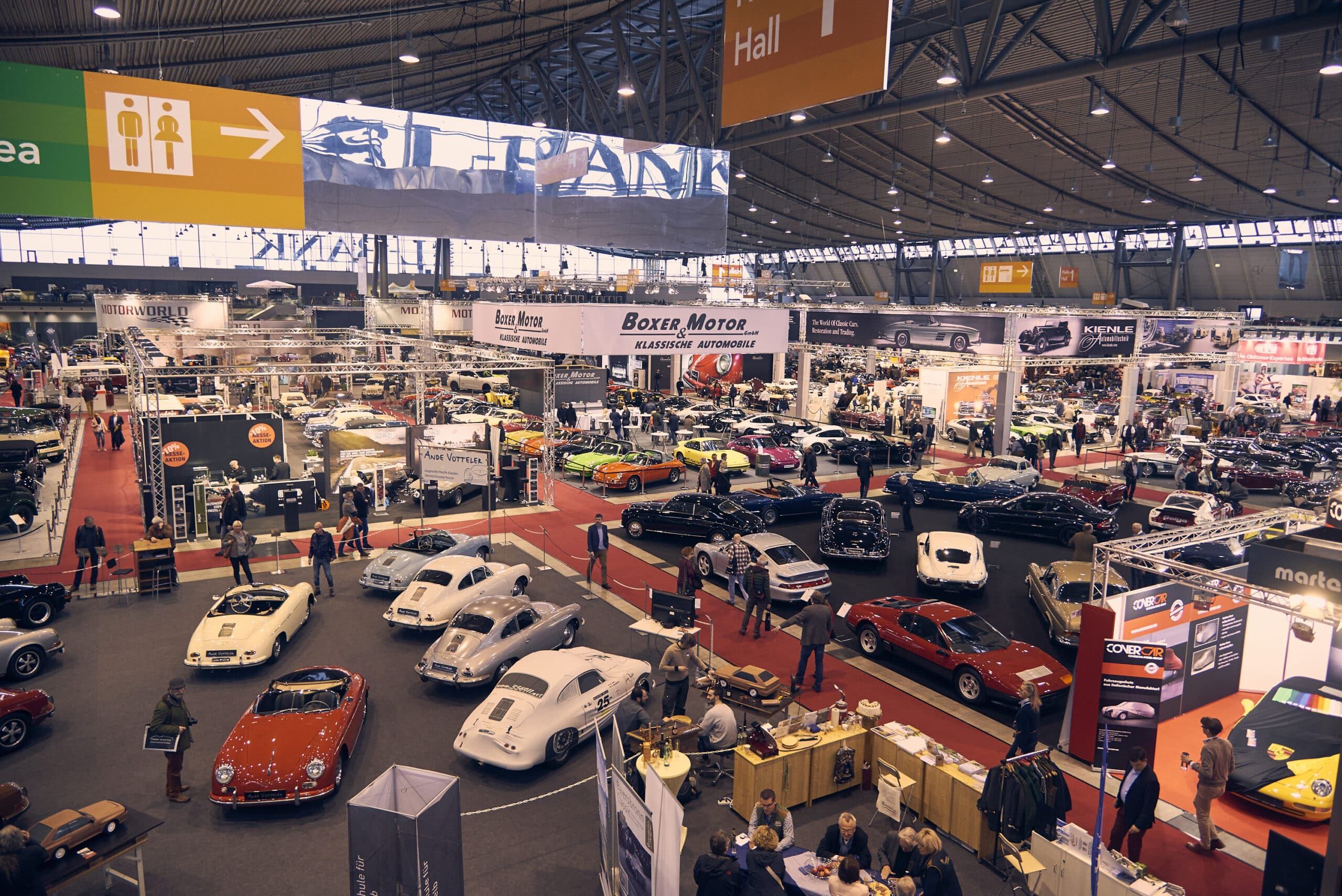
Ready to strengthen our position in the European classic car market
Soon, Auto Elect will be on the Retro Classics in Stuttgart, one of the largest and leading classic vehicle trade fairs in Europe. For us, this is not only a wonderful event full of automotive history, but above all a strategic moment to further expand our market within the European classic car market.
After all, the passion for classics does not stop at the border - and neither does our expertise.
Why the Retro Classics Stuttgart?
The Retro Classics in Stuttgart is the international meeting point for:
- Restoration Companies
- Specialists in overhaul
- Parts Suppliers
- Collectors and investors
- Dealers in exclusive classics
With visitors and exhibitors from all over Europe, this show offers a unique opportunity to bring our specialist knowledge to the attention of a wider, international audience.
For Auto Elect, this is the moment to show what we stand for: high-quality overhaul, technical precision and preservation of originality.
Focus on growth within the European classic car market
The European market for classic vehicles continues to grow. Restorations are becoming more professional, vehicles are increasing in value and owners are looking for specialists who can overhaul original parts instead of replacing them.
That's exactly where our strength lies.
With our expertise in such areas as:
- Overhaul of steering boxes
- Alternators and starter motors
- Classic electrical systems
- Specialist components for exclusive brands
we want to further expand our position within Germany, Belgium, France, Italy and Scandinavia. The demand for reliable revision specialists is high - and we are ready to play that role more emphatically outside the Netherlands as well.
Strengthen international collaborations
At the fair, we explicitly focus on building lasting partnerships with:
- Restoration companies seeking a permanent revision partner
- Classic dealers who want to guarantee quality to their customers
- Workshops specializing in exclusive brands
- Collectors with technical issues
Our ambition is clear: To position Auto Elect as an established overhaul partner within the European classic car sector.
We find that many companies need a specialist who not only overhauls, but also thinks about technical solutions, monitors originality and delivers quality at a high level.
Craftsmanship as a differentiating factor
In a market where reproduction parts are increasingly chosen, at the same time the appreciation for overhaul of original components is growing. After all, authenticity is essential for value retention.
At the Retro Classics we want to show that overhaul is more than repair:
- Original specifications are retained
- Quality is technically optimized
- Sustainability is key
- Value of the vehicle remains guaranteed
For brands like Bentley, Rolls-Royce, Jaguar, Mercedes-Benz, Porsche and other European icons, specialized knowledge is not a luxury, but a necessity.
And it is precisely in that segment that we want to further expand our presence within Europe.