Here's how to extend the life of your steering rack
October 21, 2025
13 min reading time
Gerard Brouwers
Take care of the heart of your control
You don't notice it until it's no longer smooth: slight play, heavy steering, or a car that no longer holds a tight line. The steering rack - the heart of your steering - directly determines how your car feels, reacts and feels confident. Yet this crucial component rarely gets the attention it deserves. While a little care and knowledge can make the difference between years of trouble-free driving or an expensive overhaul.
At Auto Elect we see daily wheelhouses that wear out prematurely, often due to circumstances that are easily preventable. In this article, we explain how, with focused attention, you can significantly extend the life of your wheelhouse - whether it's a classic hydraulic system or a modern electric wheelhouse with FlexRay communication.
1. Keep moisture and dirt out
Moisture and dirt are the assassins of any steering box. A small crack in a dust cover, a leaking retaining ring or dirty grease may seem harmless, but they allow water and sand to penetrate the mechanical heart. There they cause rust, wear and deterioration of seals.
Especially with electric steering boxes, this is a major risk. Electronics and corrosion simply do not mix. When moisture makes its way through a damaged cover to the motor or sensors, malfunctions or irreparable damage can occur.
Our Tip: at every service check the steering covers for cracks, drying out or traces of grease. A timely replacement of a few tens can save hundreds of dollars in overhaul costs.
2. Alignment: small difference, big effect
Wheel misalignment may seem primarily a tire issue, but it has direct consequences for the steering rack. If the geometry is incorrect, the system must continuously counter-steer to keep the vehicle in line. This causes extra stress on rack and pinion, bearings and in the case of electric systems - on the servo motor.
The software of modern steering boxes is also tuned for correct geometry. When the car is structurally skewed, the steering angle sensor and steering moment measurement become "confused. This can lead to error codes, misinterpretations of steering behavior or even disabling of steering assistance.
Opinion: Have the car professionally aligned after every suspension repair, tire change or collision. Proper alignment is the cheapest insurance policy for the longevity of your steering rack.
3. Hydraulic systems: take care of the oil
In traditional or electro-hydraulic steering boxes, the quality of the power steering fluid plays a crucial role. After years of use, the oil becomes contaminated with microparticles of metal and rubber. These circulate through the system and attack valves, seals and the pump.
Many manufacturers do not specify a fixed oil change interval, so this service is often skipped. Yet in practice we see that a timely oil change prevents many problems.
Recommendation: Change the fluid every 80,000-100,000 km or every 5 years. Use only the specification prescribed by the manufacturer.
This keeps lubrication optimal, valves clean and internal pressure control reliable.
4. Avoid extreme steering angles at standstill
Turning fully to the stop when stationary - for example, when parking - sounds innocuous, but puts enormous strain on the steering rack. The servo motor or hydraulic pump must deliver maximum power while the wheels cannot turn.
Over time, this can lead to excessive wear on the internal bearings, rack and pinion or end position sensors. Habit: Never turn the steering wheel against the stop for long periods of time. A small margin (a quarter turn back) saves unnecessary tension and extends the service life noticeably.
5. Watch for early signals and error codes
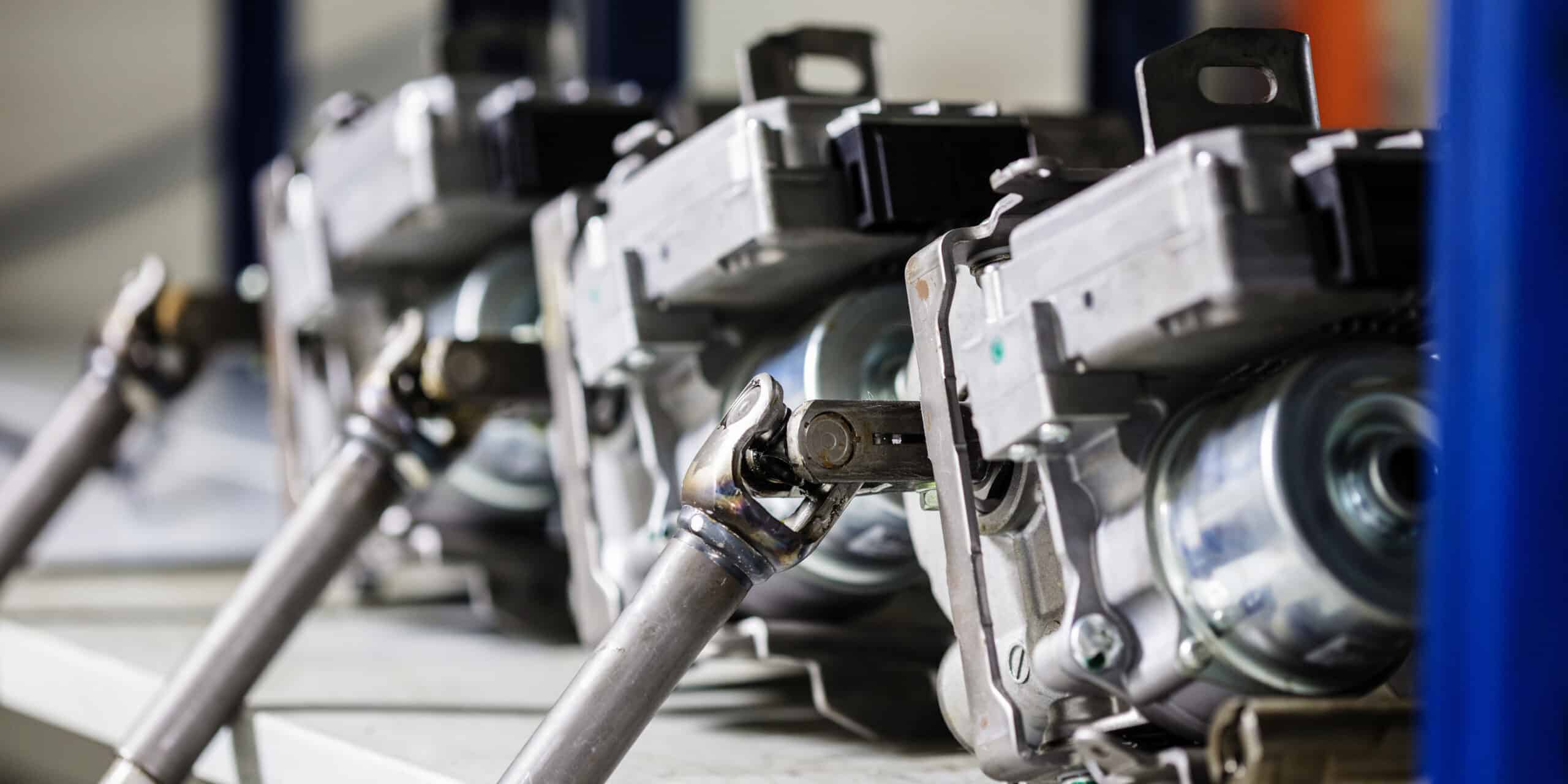
In modern electric steering boxes (EPS or FlexRay systems), software is at least as important as mechanics. Small deviations in sensors, coding errors or a poorly calibrated steering angle sensor can already lead to incorrect behavior - without anything being "broken" immediately.
Typical signs are:
the steering wheel not returning to the center position by itself;
a slight vibration or "dead zone" around zero position;
Or error messages such as "Steering assistance limited".
These symptoms are often ignored because the car "still steers just fine." But they are early warnings that something is wrong.
Have error codes read out in a timely manner and prevent a software problem from developing into mechanical damage. Sometimes a recalibration or update is enough to completely restore steering behavior.
6. Think preventively, not only when complaints arise
Many drivers see overhaul as something that should only be done when there is an obvious defect. But those who have their steering box checked preventively can often drive for years longer with the same part.
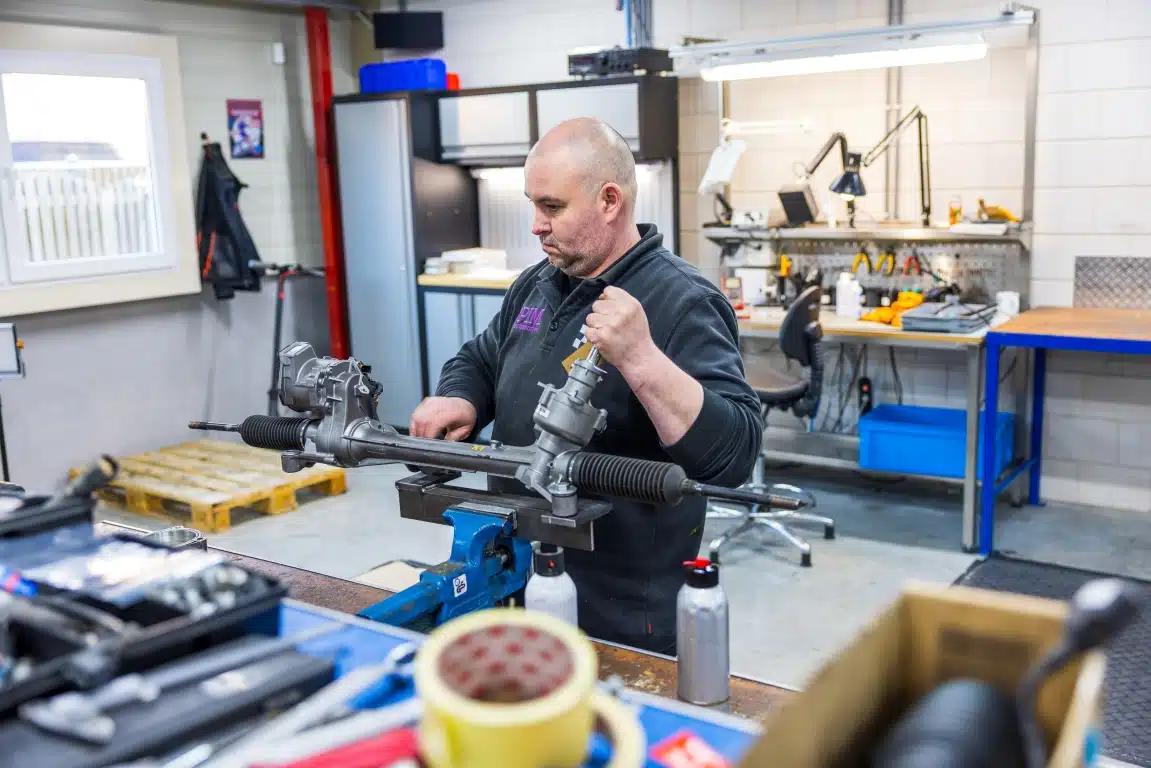
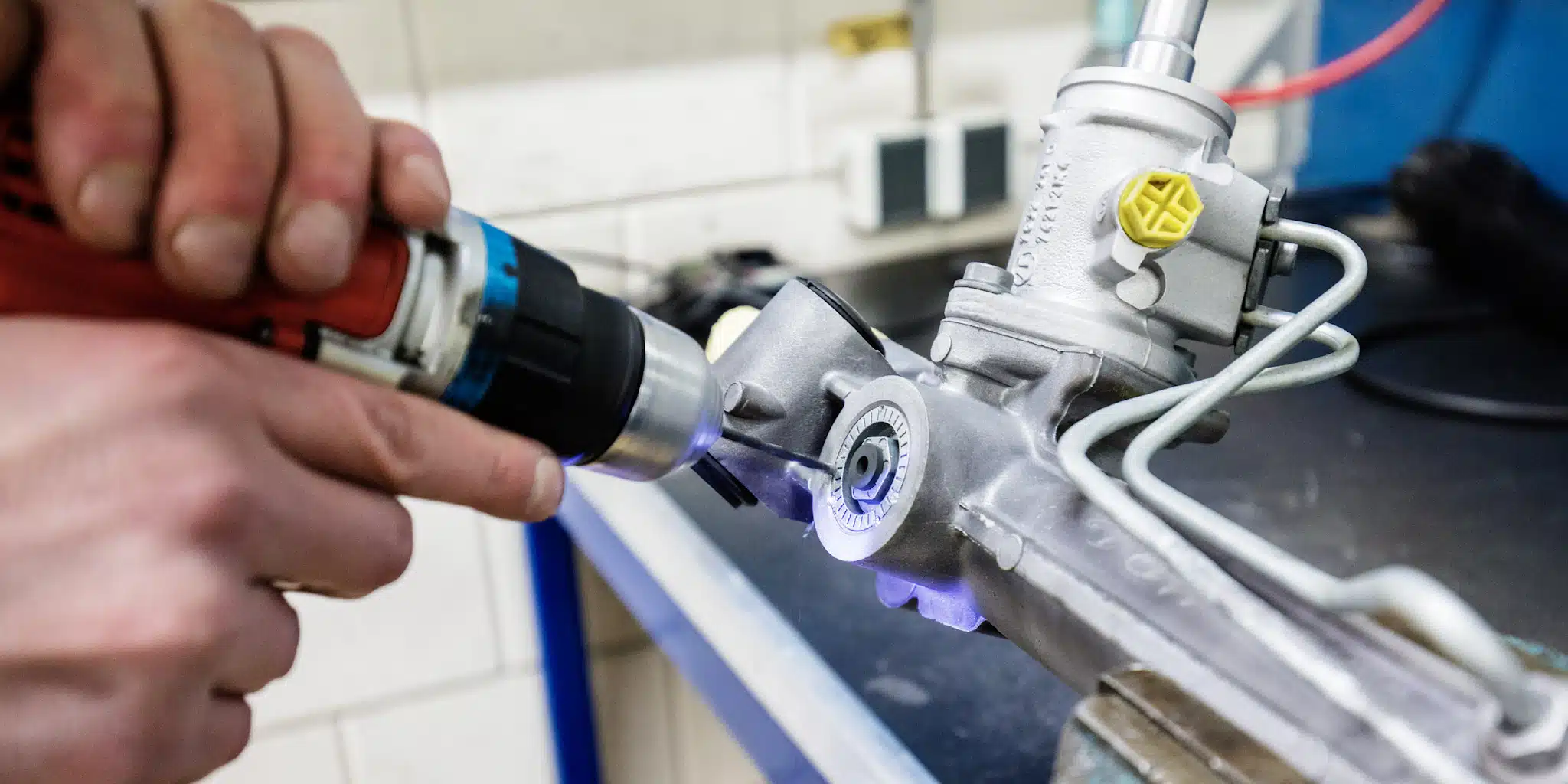
At Auto Elect we perform regular preventive inspections, measuring internal clearances, electrical control and return force, among other things. This allows us to see early if a component is becoming worn or if moisture, for example, is a threat.
An early overhaul is always better than waiting for something to fail completely. Because once motors, circuit boards or rack and pinions are damaged, overhaul becomes more complex and expensive - or sometimes even impossible.
7. The role of assembly quality
The way a steering rack is mounted also determines its service life. Poorly tightened suspension points or tension in the steering column can cause internal damage. Proper mounting to factory specifications, with proper teaching of zero position, is essential.
We frequently see a perfectly reconditioned steering box fail prematurely because the vehicle was not properly aligned or the software was not recalibrated. In short: the quality of assembly and adjustment is as important as the quality of the part itself.
8. Uses, feelings and habits
A steering box is designed for movement - but not for force. Avoid prolonged steering at a standstill, excessive force or sudden jerking of the wheel.
Modern steering boxes continuously measure the steering torque and adjust assistance accordingly. Those who steer in a calm and controlled manner spare the system considerably. Moreover, the steering feel remains more precise and natural, exactly as the manufacturer intended.
Conclusion: attention pays off
The longevity of a steering box is no accident. It is the result of proper maintenance, attention and understanding of how the system works.
By avoiding moisture, dirt and misalignment, changing oil on time, taking fault codes seriously and steering with feeling, a steering box can easily achieve double its design life.
And should it ever come to the point where overhaul is necessary, it will begin Auto Elect with a sound foundation - improving reliability and precision.
Car Elect: care with skill
Whether for diagnosis, preventive inspection or a complete overhaul, at Auto Elect we treat every steering box with the same care and precision with which it was once designed. Because good steering is not a given - it is craftsmanship.
👉 Get your steering rack checked promptly and keep your steering feeling the way it should be: precise, safe and confident.
Read more about Steering rack
Steering rack
March 31, 2026 5 min reading time Glenn Roozing
New development: soon to be ample stock of new hydraulic steering boxes